Saturday, December 7, 2013

Quick Reviews of Books About the Appalachian Trail and Long-Distance Hiking and Lightweight Gear (A Continuing Saga)

I first sat down to write this post a month ago. I decided to write up some short reviews of the many books I had read about the Appalachian Trail or relating to long-distance hiking. But when I actually counted the books I had read, there really weren't many. So I checked out every book at my library that had anything to do with the Appalachian Trail. The list is still modest, but I will add to it when I read more. The list will follow the order in which I read them.

A Walk in the Woods by Bill Bryson

This is the book that a lot of my friends asked if I have read when I first told them I was hiking the AT. It is the most popular book about the Appalachian Trail, written by renowned travel writer Bill Bryson,  and I hear it is currently being made into a movie by Robert Redford. The book was quite enjoyable, funny at many points with several serious sections about environmental concerns. I have read some thru-hikers and would-be-thru-hikers dismiss it because it does little to offer any kind of insight or wisdom into what a thru-hike is actually all about. However, Bryson knows his audience. He was writing to the masses and they don't want those kinds of details. This is a book that anyone can enjoy. After the publication, the Appalachian Trail Conservancy reports that a spike in thru-hikers followed. This book is a great first exposure to the Trail. It may not be  the best read for someone who has already researched a lot about the Trail, but it should still give you several laughs.


Appalachian Trials: A Psychological and Emotional Guide to Successfully Thru-Hiking the Appalachian Trail by Zach Davis

This was the only book I really wanted to read before heading out on the Trail. The title appealed to me. You can find all kinds of books about backpacking equipment, hiking methods, and the physical hardships that accompany long-distance hiking, but I realized awhile ago that physical strength is only a small fraction of the solution. Emotional, psychological, and spiritual well-being play the largest role in whether or not we, as humans, will overcome any given obstacle. The author, Zach Davis, thru-hiked the Appalachian Trail in 2011, published this book in 2012 and already you can find rave reviews of it on just about every Appalachian Trail thru-hiking forum, blog, Facebook group, or website out there. Davis uses his own story of hiking the AT to paint an insightful portrait of the tactics one must employ and the mindset one must develop in order to tackle the inevitable onslaught of different difficulties that arise when walking so far and living in the woods so long. He classifies several mistakes thru-hikers (including himself) make and how to avoid them. These mistakes range from big and abstract ones such as embarking without a clear purpose or goal set in stone to small and practical such as beginning in March without a sleeping bag designed for cold weather. He also includes a handy gear check list written by a professional long-distance hiker which I reference often!       

Lighten Up!: A Complete Handbook for Light and Ultralight Backpacking by Don Ladigin

Since I'm in the Marine Corps I know all too well how annoying it is to lug all kinds of superfluous gear around in a bulky backpack. I've always wanted to hike the Appalachian Trail with as little weight as possible and as a minimalist, the ultralight lifestyle appeals to me. This book has over a hundred tips on how to minimize the weight in your backpack, but I honestly don't remember very many of them. Some don't really pertain to thru-hiking the Appalachian Trail specifically and others require specific kinds of gear or skills to create DIY items. I probably will only use one or two of the actual practical tips, but the book is really about creating a different kind of mindset. It is about getting hikers to question every piece of gear and to think creatively about finding/making/using gear in as many ways as possible. Overall, this book did well at getting me in the ultralight mindset before I started considering gear options, but I think it would be just as easy to find lightweight hiking tips online without picking up this book.  
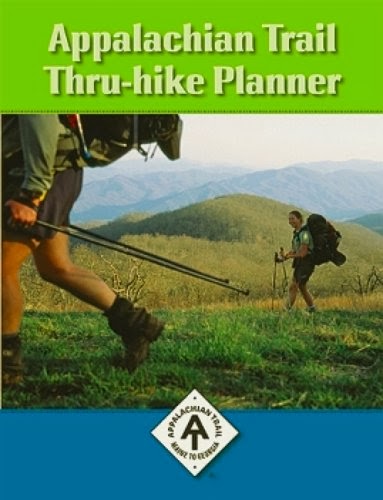
Appalachian Trail Thru-Hike Planner by David Lauterborn

This book presents all of the timeless information one would need to get a basic understanding of what thru-hiking the Appalachian Trail is about. Anybody who has already done research about the Trail will find no new information, but it could be a beneficial book for someone  who has just begun to consider thru-hiking the AT and wants to have a general understanding of what it will be like. Of course all of the practical/logistical etc. aspects of the Trail have been written about to death, sometimes in excruciating detail, and websites are filled with highly opinionated people who write endlessly about what one should/should not do so sometimes it is nice to read a straight-forward take on what one needs to know about thru-hiking the AT before traversing that great mess of information online.  


Long-Distance Hiking: Lessons from the Appalachian Trail by Roland Mueser

My wife borrowed this book from a friend who had it as a textbook for a backpacking class in college. I found it quite interesting because the author, who thru-hiked the Trail himself questioned over one hundred thru-hikers about various aspects of life on the Trail. He compiled all the information, calculated statistics, and interpreted the data so one could find out various useful information such as what was the most common injury for certain age groups or what kinds of injuries were sustained by hikers using different types of footwear. Unfortunately, the book is dated. The thru-hikers who filled out the questionnaires hiked in the late 80s. So, although the answers to some questions like, "What are the most difficult aspects of long-distance hiking?' might not change a whole lot, the answer to, "Which brand of backpack do most long-distance hikers prefer?" probably has changed quite a bit over the past twenty years. I think some hiker or some organization should send out questionnaires to thru-hikers every year to see how the thru-hiking culture changes throughout the years. If I heard that an updated version of the book was being published, I'd purchase it immediately. I've also considered getting contact information of the thru-hikers I meet on my own thru-hike so I can send them questionnaires afterward and compile the information on a webpage for future thru-hikers to use as a resource.

The Ultimate Hiker's Gear Guide by Andrew Skurka

I first heard of Andrew Skurka when I relied on his online article about making your own stove out of a cat food can to make my own. When I saw that he had written an entire book about gear that was published just last year, I knew I should read it. Luckily, my library had recently ordered it for its collection. In this book, Skurka, explains what kind of gear people use for long-distance hiking. He discusses the pros and cons of the different options we have available these days. For instance, he writes about how the various fabrics used to make shirts each have strengths and weaknesses. He also explains how the technology of gear works so you can have a working knowledge of it when deciding which gear to purchase. The book also includes helpful info-graphics that give you a side-by-side comparison of the options for any given piece of gear, Skurka's own picks for several specific pieces of gear, and many small sections sprinkled throughout  the book that contain relevant information such as how to take care of your feet. Although some people might not really enjoy all the technical writing about gear in this book, I think it is beneficial, although maybe not necessary, for any thru-hiker to know.      

AWOL on the Appalachian Trail by David Miller

Since I hadn't read many memoirs of people thru-hiking the Appalachian Trail, I decided I'd better pick up a few more. And I thought where better to start than with Dave Miller aka AWOL's, the author of the annually updated A.T. Guide (which, as I've read over and over again, is the best guide out there)? This book does not have the high entertainment factor as Bryson's book, but I don't think Miller was going for that. In fact, I don't think I'd recommend anyone who is not thru-hiking the Trail to read any thru-hikers' memoir, except A Walk in the Woods. That being said, people who are planning to thru-hike love this book. The fact that a middle-aged man leaves his job and his family (temporarily) to embark on an adventure of a lifetime is appealing. We see a lot of ourselves in him, since all of us have to give up our normal lives for a time, to answer the call to the Trail. Miller goes into the kinds of detail that will give the reader a sense of what a thru-hike is really all about: the experiences, the lifestyle, the terrain, the rain, the pain. Although Miller isn't philosophical too much in his recounting, I gleaned some gems from his story. He talked about how important it is to be an inspiration to his children, how he had to go on a thru-hike, because if he didn't they would see that he didn't follow his dream. They could of had a dad who stayed at home, sacrificing his own soul to maintain the status quo 9-5 job that isn't quite fulfilling enough. Another benefit I got from reading this book and other memoirs is a familiarization of the terrain. I now know names of certain mountains and features of the different states. I will know a little bit more of what to expect as I approach different places when I cast off my own work pants and go off to get lost in the mountains.  

On the Beaten Path: An Appalachian Pilgrimage by Robert Alden Rubin

You can tell the author of this thru-hike memoir is an English professor right off the bat by his style of writing, not that it is pretentious or difficult to read by any means. Again, he is a middle-aged man who has left his career and family for this grand adventure. He is very philosophical throughout the book and quite honest as he lets his personality and ultimately human's broken-ness shine through. This is what appealed me to this story the most. He writes about the terrain, the physical hardships, and all the rest, but he has come out on this journey to find something missing, to escape something, and yet he cannot escape everything. He still has his own self to contend with and the end of the story is the end of his hike, not his life. Realistically, he cannot draw any neat conclusions or find some nice meaning tied up in a bow along the way. Perhaps though, he learns (and we learn through him) that life will always be filled with regret, mundaneness, unresolved relationships, room for growth and it isn't about reaching a conclusion or an ultimate solution to a problem.  

The Appalachian Trail: Celebrating America's Hiking Trail by Brian King

This is a beautiful coffee-book table loaded with wonderful photographs of the scenery of all fourteen states in all seasons. The professional pictures showcase the mountains in all their glory, trees on a hillside peeking through the morning fog, icicles hanging off a snow-covered oak, and every other magical kind of scenery you could expect to find along the Appalachians. Included with the photos is the full history of the actual Trail itself, how it came to be from the minds of a few men to the large organized volunteer force who blazed the way. The content itself is quite boring to read, but it did give me a greater appreciation of all the effort that goes into building a trail over two thousand miles long! From organizing volunteers, to fundraising, to assembling leaders to fight for legislation that would give them the land, it really is nothing short of a miracle that in the midst of a highly modernized country is a small continues footpath that spans from the deep south to the far north.

Becoming Odyssa: Epic Adventures on the Appalachian Trail by Jennifer Pharr Davis

This memoir was a refreshing break from the three other memoirs I've read, all written by middle aged men. This one is written by a young woman fresh out of college. It was an enjoyable read just to see an AT thru-hike through a completely different perspective. Her story describes well what the culture along the Trail is like, highlighting trail angels and the different types of thru-hikers one could encounter. I did find the lessons she learned trite, but that is exactly what I would expect from a young woman experiencing post-college, real-world stuff for the first time. It isn't a bad read, especially if you're a young woman who wants to know what it might be like to thru-hike the Appalachian Trail.  


The Lost Art of Walking by Geoff Nicholson

This book doesn't ever specifically discuss the Appalachian Trail, but given the title, I thought it might be a good read anyhow and shed some light on the mental, emotional, spiritual etc. beauties of walking. I shouldn't have expected that. I was disappointed in this book, thinking it could have been so much more. Mostly he discusses weird, and sometimes funny, historical exploits involving people walking along with his own personal history of walking in the places he has lived. It wasn't a bad book, especially considering it is about a mundane topic familiar to most human beings. It just really gave me nothing to think about in terms of walking the Appalachian Trail. Maybe if it was called the Lost Art of Long-Distance Hiking or Backpacking it would have been more up my alley.


Southern Appalachian Poetry

This is a great collection of poetry. Including work by thirty-seven different poets, there are several different styles and perspectives in this book, so if one doesn't quite move you, another will be sure to. The poems are uniquely tied together by common elements that reveal the culture of Southern Appalachia in some beautiful ways. Although it is in no way necessary it is nice to get a glimpse of the culture and history of the places you are traveling through. Instead of writing more I will share a poem that seems like it could be written by a thru-hiker.

Shenandoah

Flurries of dogwood, fields clouded with cows,
                                                              Floridians climbing the slopes slower than spring:
                                                              time thins with air, whole hours suspended
                                                              perfect as birds gliding the wind's high ridge,
                                                              the blue earth's turning speed enough. Whole   
                                                              days
                                                              condense to a moment: the flame azaleas
                                                              and cardinals, the soft green curtain ridge    
                                                              pleated between peaks, the vanishing points
                                                              soundless again under the sky's bright tiding
                                                              and remote as the blue relief of the heart. 

                                                              -Michael McFee

Wild by Cheryl Strayed 

My wife picked up this book from a shelter while thruhiking and I read it after she did. It isn't about thruhiking the Appalachian Trail, but about a woman's hike of the Pacific Crest Trail. It is humorous at times like A Walk in the Woods, but also deeply personal, and so much more engrossing. There is a lot about the therapeutic nature of hiking a long-distance Trail and about the general culture and day-to-day aspects of Trail-life. Some of it is specific to the Pacific Crest Trail, but her story is so wild and full, I expect anyone who reads it will feel at least some tug to get out and hike a long-distance Trail for themselves. So if you need inspiration and like a good story, this book is a great, quick read. There is also a movie of the same name coming out in December, 2014 starring Reese Witherspoon. I'm sure, again, both the Appalachian Trail and Pacific Crest Trail will see an influx of thruhikers this coming season.

Friday, November 22, 2013

Laid to Rest or Put to Death: A Tragedy (Comedy?) in Three Parts

Part I: Insertion Failed

I am quite the film buff. I can spend hours sifting through movie trivia and rewatch certain scenes from my favorite films over and over again until I've memorized every inflection of the actors' words and every movement of the cinematographer's cameras. Since we have no television or DVD player in our living area I have come to rely on the DVD drive of our computer and our library's expansive film collection to fulfill my appetite. Much to my chagrin, our local library dealt with budget cuts by removing the ability of patrons to borrow any kind of media besides books from the interlibrary exchange program. I could borrow any DVD from any library across all of Michigan which pretty much meant limitless possibilities, but now I can only borrow from the thousands of movies our local library owns which is still pretty much  everything I could want except P.T. Anderson's Magnolia. One fateful day, a couple of months ago, I inserted the library's copy of Terry Gilliam's 12 Monkeys into the DVD drive of our computer and in typical Macbook fashion, it snatched the DVD right from my hand and pulled the disc in by itself with a loud digital noise of unseen mechanisms sputtering to life. The noise grew louder as it attempted to read the disc and then it grew quiet. It rose again and quieted again and after another attempt or two it rejected the disc, spitting it halfway out of its mouth like an undisciplined child. Ever since, the DVD drive has refused to accept any DVD or CD. I have tried to force-feed it, but it remains tight-lipped. Woe is me! Now I cannot watch movies whenever I want! It really isn't so bad. I can still watch movies on occasion when I am not working and the upstairs living room isn't occupied during the week days.  

Part II: The Reanimated Man and the Replaced Phone

Ever since living in Grand Rapids I have looked forward to every October so that I can dust off my acting chops and don zombie-garb to do my part in the annual zombie dash downtown. Three miles of downtown Grand Rapids is transformed into the apocalypse for one night as hundreds of survivors attempt to run a zombie-infested course without losing their life-strips (white flags hanging off their hips) to hungry zombies. It is a great event and free if you play a part of one of the hundreds of zombies! This year I went as a zombie groom in a suit and blood-spattered collared shirt and tie. My wife expertly applies my make-up, using her skills to turn me into one of the best looking zombies of the bunch. This year we had to work until just short of the race and we rushed to get me zombiefied and out the door. When we got outside I sent my wife back inside to grab our new cellphone so she could take some photos of me so I could post them to Instagram which I just joined a few days prior with the first Smartphone I've owned since Instagram was invented. Since all parts of my body not covered by my suit were covered with makeup, my wife had to carry and load all of our stuff into the car and open the door for me so I could climb inside. Hurriedly, she snapped some photos of me and buzzed around the car to get our stuff in the car before coming back around to put me in the car. I felt like a mannequin, stiff, with my hands kept hovering in front of me like Mr. Burns to keep the makeup as fresh as possible for as long as possible. It was a really fun night as I hammed up my part as the living dead by falling out of bushes in front of scared survivors and tripping over the curb in my animal-like craze for human flesh. When we got home I looked for the phone so I could post the pictures, but could not find it in any of our bags. So we looked in the car. Then we looked outside where the photos were taken. Then we got flashlights and looked in both places again. Thoroughly. Finally, we decided to drive back downtown to look there. After we made the first turn in our car my wife noticed a small black object in the middle of the intersection where we made our second turn to go downtown. I jumped out of the car and rushed over to the object. There was our new phone smashed in total destruction. In the rush to get downtown my wife placed it on top of the trunk and forgot it there as we drove away. I couldn't believe it at first! Two freak accidents have ended the lives of both the Smartphones I have ever owned within a couple of weeks of purchasing them! Surely this must be a sign! For awhile I really liked the idea of going out there on the Appalachian Trail with no electronics besides a simple prepaid phone, but my wife really wants to be able to take photos out there. So, after thinking through various options we decided to buy another Smartphone to replace the broken one, but to abstain from a talk/text/data plan that would have cost $45 a month. So, we will bring my simple prepaid phone for calls and the Smartphone to use as camera, music player, and Internet browser when there is wifi in town so I can blog. It might not be as convenient as having a good plan for one phone and it will be a little heavier with the extra phone, but it will actually save us a couple hundred bucks in the long run, even after having to purchase our Smartphone twice. And we decided the purchase would count as our Christmas gift for each other. Since the hike seems so close now, we are trying even harder to save as much money as we can before we set out for the grand adventure!

Part III: Take a Hike!

An hour after dropping me off for drill with my Marine Corps Reserve unit, my wife texted with the news that she never made it to work. Instead, she was in an auto shop after being towed there when the two back tires blew not a mile away. The new tires and the tow set us back a couple hundred bucks and the mechanic told her the wheels needed to be realigned. The tires blew because the alignment was off. This was a problem we had no idea we had. I know absolutely nothing about cars, so this just came out of nowhere. We didn't anticipate having a car repair expense. Though, who ever expects this? A couple of days later we brought the car in to get the wheels aligned, but when the mechanic tried to do this he found the control arms were bent on both wheels so they couldn't be aligned until we replaced the control arms which cost several hundred dollars apiece. We decided not to fix it right now and have begun to use the car sparingly. To that end we bought bus passes, coordinated with a coworker for carpooling, pumped up our bike tires, and broke out cold weather clothes and backpacks for walking. In fact, the past two days we walked back from work. One way is 6.5 miles. It is good training for the Trail to be forced to walk like this.


Sunday, November 10, 2013

The Brave Little Stove

I heard about do-it-yourself soda pop can stoves a few years back and after reading in a few places that thru-hikers of the Appalachian Trail used them, I felt validated to follow suit. I gathered a few soda pop cans kept putting off the construction. I am not the most crafty person in the world with little patience to make sure everything is perfect, but I definitely did not want to spend between $40-$200 for a piece of gear I could make myself for less than a dollar that would work just as well for my purposes. Fortunately for me, since I kept putting off making the soda pop can stove, I came across a much simpler design using a cat food can. I wasn't sure if it would work as well as the popular soda pop can stoves I had heard so much about, but as I read The Ultimate Hiker's Gear Guide by Andrew Skurka, a professional thru-hiker, I found that he uses the cat food stove for all of his hikes. He even provides instructions on how to make one on his website here. I will also show how I made my stove, albeit a lot less professionally.

So I bought the off-brand cat food can and gave the food to my sister's cat. Then I cleaned the can and borrowed a hole-puncher from my mom. Then came the hard part. I had to punch two rows of holes at the top of the can. The holes had to be equally spaced with the bottom row of holes placed directly below the spaces between the holes of the top row. This was quite difficult for me and my first attempt looked like this:
After this was completed I rushed to our local hardware store to get the fuel. This type of stove runs on denatured alcohol which can be found in most hardware stores or paint stores, as well as in some outdoor stores. Denatured alcohol is cheap and I have read that increasingly, outfitters near the AT sell it by the ounce since it normally comes in large metal containers which would be too heavy to carry on the Trail. I brought the can home and poured some in the stove, below the holes. When I lit the fuel with a match I didn't know that it had lit at first. When I put my hand near it though, I could feel the heat. The flame is nearly invisible, especially in broad daylight. I placed a pot of water on top of the stove and watched the water carefully for several minutes until it finally began to boil. It worked!
I didn't touch it again until a couple of days before our hike of our Waterloo-Pinckney Trail. I bought another cat food can and with the help of my wife made sure the holes were pretty spot on where they were supposed to be. So now our stove looks like this:
I also had to make a windscreen because any kind of wind flow can greatly decrease the effectiveness of the stove. The windscreen was also simple to create, following Skurka's instructions here. I borrowed some aluminum foil from my sister and folded it in half lengthways. Then I simply folded all the edges so they were double thick. I then attached binder clips on the bottom to allow it to stand up more and to attach the two ends together when wrapped around the stove.
We didn't get a chance to actually cook a meal with the stove until our trip. We brought oatmeal, instant noodles, macaroni and cheese, and an onion soup mix. Our first meal was the instant noodles and we had a picnic table to set up the stove on. All of the shelters of the small section of the AT that I had hiked before had a picnic table in front, but the shelter itself could also work as a level ground. The third night out on our hiking trip we had no picnic table and had to cook on the ground. This was easy enough. Our 1.3 L pot does sit a bit precariously on our stove, but as long as we are careful all should be well.
We brought denatured alcohol in a small plastic water bottle, clearly marked so as not to confuse it with drinking water since the liquid is clear. After pouring it in the stove, lighting it, and placing the windscreen and pot in place we left it to do its work on the noodles while we set up camp. After a few minutes we noticed the pot smoking and rushed over to see what was happening. The fire was burning the plastic that cover the ends of the handles I had collapsed onto the sides of the stove. So we pulled the windscreen apart a bit and left the handles extended whenever we cooked for the rest of the trip. I think we just need to make the windscreen bigger so we can pull the handles a little bit away from the stove while keeping the windscreen totally surrounding the stove.
The tricky part about using an alcohol stove is that there is no way to put out the fire so we just let the fuel burn itself out. Hopefully we will learn quick how much alcohol we need for the amount of food we are cooking at any given time so as not to waste as much. We will never want to carry any more fuel than we need to get us to the next resupply point.      

The stove works very well and is extremely lightweight. It will be really nice to have hot meals, especially when it will be so cold the first several weeks of our AT thru-hike. For awhile I contemplated going stoveless as some do on their thru-hikes, but I think it will enable us to have a few more options regarding nutritional intake for our wearied bodies.


Sunday, October 20, 2013

Waterloo-Pinckney Trail (Take Two)

I just noticed today that the original version of this blog post was deleted! This is what I think happened: We bought a Smartphone last week to have for the Trail and I tested it out for blogging Sunday afternoon before we went to a coffee shop. I wrote a paragraph on the phone and finished off the LONG post at the coffee shop on our computer. Today when I checked back at the website, I found only that first paragraph I wrote on my phone. I think I forgot to close the app so after I finished the post on the computer, the Blogger app that was still open on my phone thought its one paragraph was the updated version and automatically saved over the post I had written at the coffee shop. Oh well! I'll just have to write it again.

We purchased a used Samsung Galaxy Glide to function primarily as camera, music player, and blog writing device, as well as for a phone on the Appalachian Trail. We don't know much about Smartphones, but chose this one for the 8 MP camera and slide-out QWERTY keyboard. The only negative thing about it so far is that the battery doesn't last too long while using most apps that require looking at the screen. We will keep it in airplane mode while on the Trail and use it there solely for the camera and music player. Blogging will be done in towns where I can find an outlet. Still, I will always choose a computer over the phone if a computer is available because it takes extreme patience to write on a phone, as I learned in the time it took to write that one paragraph. We plan on using StraightTalk with our phone on the AT since we have no need for expensive service with long contracts. We won't get this plan until we leave for the AT, but for now we can use the phone for a camera and in our home where we have wifi.

Now to our second multi-day hike together! The government shutdown forced us to change our plans for our multi-day hike. The island we wanted to go to was on national park land so it was closed. There will be no more ferries traveling over there until next year so we might just have to go after the Appalachian Trail. It seems strange that in a year from now we will have already completed the AT. At least we better have, since Baxter State Park, where Mt. Katahdin is, closes on October 15th. It seems weird that after almost six years of service in the Marine Corps Reserve, I only have two months left. I can finally leave the Midwest and explore more of America. And after that, I can explore the world! And grow a great beard and ponytail!                                                          

In any case, we decided to hike the only multi-day hiking trail in southern Michigan: the Waterloo-Pinckney Trail. It is 36 miles long. The first night of our trip we slept at a campground before beginning our hike. We brought along my wife's sixteen-year-old brother for the adventure as a late birthday present. The last time we went for a multi-day hike we had a problem with our sleeping pads splitting apart from each other during the night, which is problematic since we share a large sleeping quilt. My wife came up with the idea of bringing along a fitted sheet to keep them together which worked well. As we tried to fall asleep, I noticed my pad was sinking more and more to the ground and I was getting colder and colder. Finally, I took it out of the tent to examine it and we found a small hole. The pads came with repair kits, but we didn't bring them and we didn't have anything else with us that could fix it. So we just made do with one fully functional pad for the rest of the hike.

In the morning the outside of both the inner and outer portions of our tent were soaked even though it hadn't rained. The dew pint must have been quite high. Our inner tent hasn't ever been that wet even after severe thunderstorms all night long. Thankfully, we stayed mostly dry, except my brother-in-law who was shoved to the one side of our two-person tent and was touching the wall. We brought along our new rain ponchos, but sadly never got to try them out. We will have to test them later, perhaps just take a hike through the town next time it rains hard.

I'd say we hiked pretty well. We put in 14 miles the first day, 15 the next and 7 miles in half a day to finish it off. We were really pumped to get to a restaurant at the end. That is one thing I am really excited about the AT: the food we get in towns will taste SO good after a few days of hiking. We'll get to experience that over and over again. In my normal life I indulge in what I love and it becomes dull-tasting. It is hard to appreciate that which I can have whenever I want.

The Waterloo-Pinckney Trail itself was not as beautiful as the Pictured Rocks National Lakeshore Trail, but it probably looks more like much of the AT will be like. We encountered a lot of horseback riders, mountain bikers, and snakes. I found that I didn't pay much attention to the scenery over the three days of hiking through the woods. I get lost in my own head a lot. Toward the end of the hike my wife and brother-in-law were talking about the dozens of chipmunks they had seen, when I had only noticed one the entire time.

One of the things I was really excited about on this trip was to try out our new pot with my homemade alcohol stove. On all the hikes I have ever gone on I have simply brought leftover MREs from training. They come with individual one-time-use heaters, which are basically some chemicals in a bag that activate with water. I had no need for a stove. But MREs are heavy and what I have wouldn't last us very long on the AT. I will write up a full report on my DIY stove in my next blog post. And now I can post photos with our new phone!

Lessons for the Trail:
Bring all repair kits.
Bring ductape (this would have been useful for repairing the sleeping pad and I've read that it comes in handy a lot for a myriad of reasons from too many thru-hikers not to bring it now).
Take time out to intentionally spend significant amounts of time focusing on small parts of nature, like a view from a cliff or a single leaf, letting the beauty and complexity of this world enrapture me.
Figure out an easy way to clean our pot.


Wednesday, October 2, 2013

Just a Few Notes

My wife and I have been quite busy for the past few weeks which is why I have not posted anything recently. We both are working more hours now which is great for saving money for the Trail. We have also been slowly accumulating some more gear.

We both bought shoes to hike in that are expensive and light. There are so many options available out there. We just went with what the experts at outdoorgearlab.com recommended. I am not worried about my feet. I usually don't have any problems with my feet. I wear my shoes out, refusing to purchase a new pair until the shoes get so many holes they start looking more like sandals. I have walked around barefoot a lot, especially in my college days. I went everywhere shoeless, even to a job interview. That was probably a mistake. I didn't get that job. Anyway, my feet are tough. Whenever I go on long treks with the Marines, I end them blister-free while many others are licking their sore, blister-covered feet. Once a friend donned my shoes to make a quick run across the street to get something he needed, and when he returned a few minutes later his heels were worn through, red and hurting. I wore those shoes all the time and never had a problem. After reading about how much thruhikers have problems with their feet and about how no one makes it in one pair of shoes (some burning through several pairs before the end), I want to try making it in one pair of shoes. This isn't really a serious challenge and I know there is slim to no chance of making it, but we'll see how it goes. I read about how we should buy shoes half a size bigger since our feet will swell up with all the walking. I am just worried that won't be enough when wearing thicker socks as well.

We also bought a titanium cooking pot that can hold 1.3 L. Titanium is super light and it really was a no brainer to go this route. It is just more expensive. I have tested out building my own alcohol stove which went pretty well. It is super easy, but I am not the most crafty person. I am also not a perfectionist and have a hard time being patient enough to make something as perfect as I could. So I am going to build at least two more, until I can perfect it. I am also going to cook meals in two different sizes of stove to determine which is more efficient. Once I run though this gamut I'll post about the whole experience.

I was going to write a post reviewing the books I've read about long-distance hiking and the Appalachian Trail, but discovered I haven't read that many. So I am currently scouring my library for every book about the Appalachian Trail. I have read eight so far and will read a few more before I write about them.

We have been planning on taking another multi-day hike on an island for quite some time, but logistically we couldn't make it work until now. We will be going in a week and a half, just in time, as the ferry to the island closes for the season right after we finish. We will be going north to Sleeping Bear Dunes and spend one night in a backcountry campsite near the shore before taking the ferry to North Manitou Island, which is completely uninhabited. It is nearly eight miles long and over four miles wide. The shoreline goes 20 miles around. It will probably be quite cold up there so it will be good to test out our gear in those kinds of conditions similar to the first couple of months of our Appalachian Trail journey.

At long last we decided to buy ponchos instead of the combination of rain jackets and a rain cover for the packs. This decision is the one I am most hesitant about so far, but we will just have to test them out. I read forum after forum of hikers arguing about whether ponchos or rain jackets are better. Both have very obvious pros and cons. The main thing to keep in mind is that when we are on the Trail we will get wet a lot. Nothing can stop that. The ponchos are about keeping us warm enough not to get hypothermia when it is both rainy and cold. Hopefully, it will rain on the island so we can see how well they work. If we stick with the ponchos we will also probably add some rain pants. We didn't buy cheap ponchos at Walmart, but stronger ponchos designed for backpacking.      

Friday, September 6, 2013

Half A Year Til' Zero Hour

At this point I don't think a day passes that I don't think about the Appalachian Trail. I read books about it. I read other people's blogs about it. I watch YouTube clips about it. I am a part of the official 2014 Thru-hiker's Facebook page and a fan of the A.T. Guide's Facebook page. It is easy for me to get excited while reading stories from the Trail or watching endless videos of thru-hikers' gear or of the scenery. My wife and I have also watched the National Geographic video on the Appalachian Trail. A lot of these stories and video may not be very interesting to most people, but for all thru-hikers-to-be they are fascinating! Some days I spend hours perusing blogs and videos. I noticed some bloggers have included a countdown meter on a sidebar which, I can imagine, must be very exciting to see as the numbers dwindle away. My wife and I have decided to leave in March, preferably earlier rather than later, but not the 1st or a weekend so things won't be TOO crowded. Since thousands attempt a thru-hike, and most are hiking from Georgia to Maine, the Trail is extremely crowded at the beginning. Everyone has a small window of time to begin hiking in order to make it in time before Baxter State Park, where the northern terminus of the AT is, closes. Most hikers begin in March or April. We don't have a date set in stone yet though, so we can't have a fancy countdown!

Anyway, in case you've thought I've become too philosophical and serious with my recent posts, I'm posting a video made by a young couple who thru-hiked in 2012. The video is very inspirational and my wife and I have watched it at least twice together. It really excites us for our time on the Trail! Enjoy!

Thursday, September 5, 2013

Are You Not Entertained?

A few days ago I told a coworker about my thru-hking plans and he replied in disgust. He said he had a friend who hiked the Trail and after one week the friend had an alright time, but after two weeks he was completely bored. Still, he hiked the entire Trail. I have read about this boredom from other thru-hikers before. After all, each day consists of the same thing: walking from sun-up to sun-down. The natural scenes around thru-hikers might seem wonderful and exciting to see at first, but as it seems to go with all humans, a lot of anything can make us complacent and long for anything at all that appears new. Maybe this isn't natural. Maybe we are taught to easily lose interest with the now because we are taught to want the new toy for Christmas, we want to hear the new music, and see the new television shows and movies.

This brings me to our entertainment culture. We don't have any excuse to be bored in our lives. We have so much we can fill our time with. If we aren't working, eating, or spending time with friends, there are plenty of options for entertainment all around us. In reality, for a lot of us entertainment is a big, if not the biggest sphere of our lives. Perhaps we can see this in the television watching habits of some American families. Recently, a few friends admitted that it seems strange to eat dinner at a table because when they were kids, the entire family would gather around the television set for dinner every night. Perhaps the growing number of young men and women who still play video games well into their thirties is also an indication.    

I do think entertainment has value. First of all, entertainment can be art. I don't think all entertainment can be classified as art however. A lot may have some kind of aesthetic quality, but a lot of producers of entertainment are simply trying to make money and entertainment is more easily consumed than art. Therefore, humans are more apt to consume television, film, music etc. that is more purely entertaining than artistic. However, if people are willing to put some work into what they view, read, listen to, etc, a lot can be gleaned. Properly engaging art requires work, otherwise a lot that art can give is lost. Surely people can enjoy art viscerally and it well should be. However, in my experience, when I have taken the time to go deeper in engagement with a particular piece, I enjoy it considerably more. Sometimes all it takes is a closer look at the painting, a second look at the film scene, a rereading of the paragraph in the novel a few times. This can trigger the mind to go places it wouldn't at first exposure. Sometimes it takes a little more work. Sometimes it requires asking yourself questions that seem meaningless or easy to answer at first to get somewhere. A good place to start is with your own visceral reactions. Perhaps after watching a scene in a movie you feel sad or angry or happy. Ask yourself why you feel this way? How did the creator of the work make you feel that way? These can lead to greater question and more understanding. Art is, after all, supposed to be saying something. It is revealing a particular point of view about life, love, a certain culture, etc. I have missed a lot if I walk away having only been entertained. But this happens to me often! I want to be lazy and just enjoy it. I want to be entertained. I don't want to work. Sometimes I make myself feel better by throwing on an "artistic" film, and yet do not engage it all in my mind. But this might not be any better than watching a popcorn flick full of the same-old car chases and shoot-outs or the complication in the relationship that ends up working out in the end for the two main characters as they kiss passionately until the credits roll. I think it is pretty easy to steer away from the big-budget, pure-entertainment blockbusters, pop music, and fake reality television shows. It just takes good judgment and the willingness to find ones that have artistic value. After that, it only takes some thoughtful analysis to truly allow the art to have a voice. The hardest part to overcome is the desire to take the easy way out, to be lazy and just be entertained.

That being said, I also think there is a time and place to allow yourself a complete rest. This is time when it is quite right to enjoy entertainment for nothing else, but to be entertained. I just think that people, in general, go to extremes. Some really indulge in entertainment too much. They just consume it and allow themselves to become passive receptors to all the latest movies and television shows. I think I fall into this extreme because I am a lover of film and literature in particular. But I also watch a lot of silly television shows. There can be a lot of psychological reasons why someone would be inclined to allow themselves to sink into entertainment too much. On the other extreme, there are a lot of people who let work consume them. Our culture can put a lot of pressure on people to work a lot and to work hard for the kind of salary that will provide a nice car, a nice house, and all the safety nets available for their families. I know some people who just have a drive to let their work run their lives, even when it is something they don't REALLY enjoy doing. The general desire for or appearance of SUCCESS can be haunting. I see some of these people work themselves so hard that when they do rest, they look like zombies. They may not immerse themselves in entertainment regularly, but when they do, they go deep. I think this is also unhealthy.

Ideally, I think people need to find a nice medium where work is enjoyable, but doesn't consume too much of our lives. Then we can rest in pure entertainment for a tiny bit. Mostly though, we should find ways to rest that are actually beneficial such as a proper engagement with art. Or a walk in nature for silence and solitude. The most important thing that I think entertainment has destroyed is the space and time we need to be with ourselves with no distractions so we can listen to that still, small voice inside us that is trying to tell us the hows and whys of life. How can I live meaningfully? How can I forgive? How can I be truly humble?

We quiet it by turning the knob of our television sets. We become little gods when we sit on our couches with a tub of popcorn. We are immortal as that flickering light dances before us. We do not fear during that time. We do not want. We are not haunted. We have no past and no future. We don't hear a voice asking more of us. We are complete and satisfied.

So I welcome the boredom! I long for it! We run from ourselves too much! We must come back. Come back and discover who we truly are.